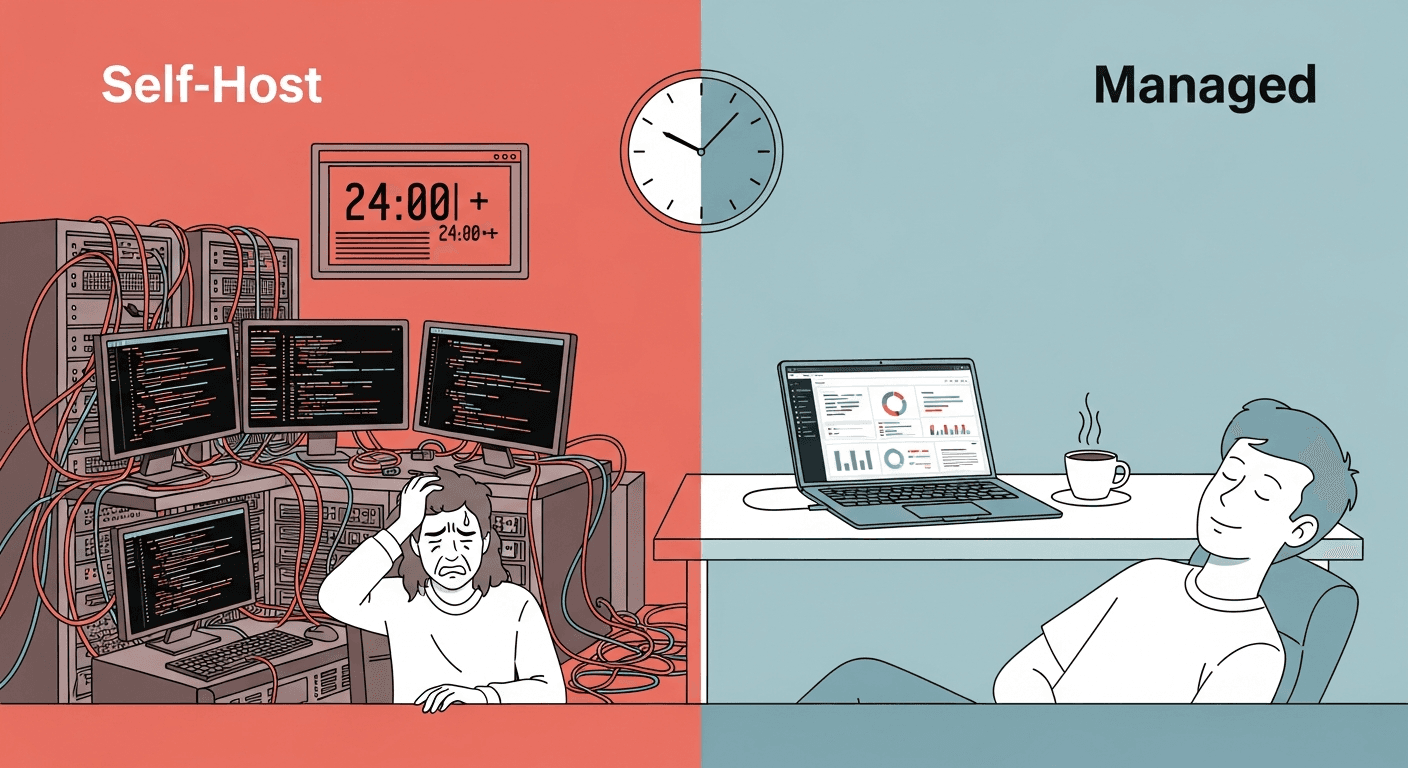
Managed OpenClaw vs Self-Hosting: The Real TCO for 1-30 Person Teams
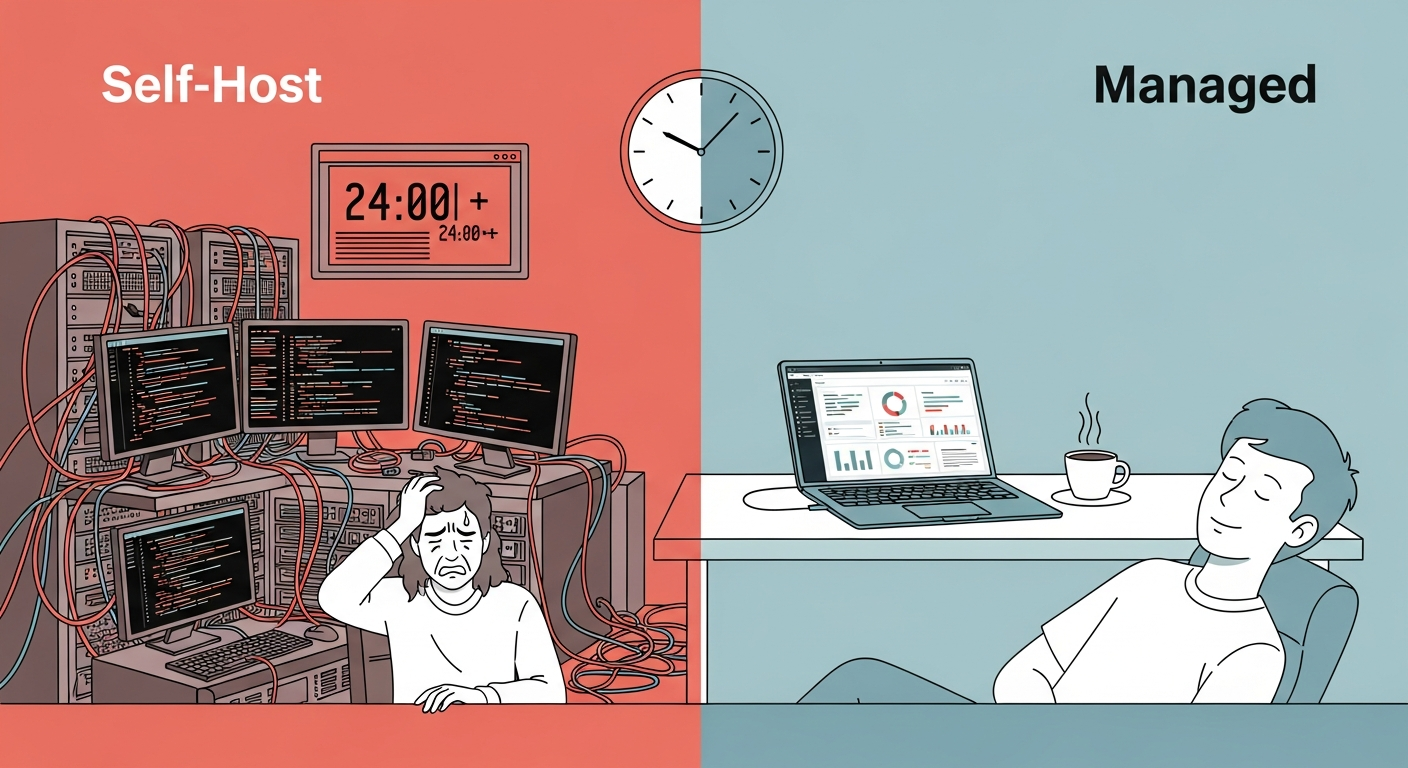
For most teams, weekend maintenance is the hidden tax that kills ROI.
Most teams compare Managed OpenClaw vs Self-Hosting using one number: server price.
That is not the real decision variable.
In production, TCO is mostly driven by:
- operations time,
- token governance quality,
- security overhead,
- and risk-adjusted incident cost.
The TCO components that actually matter
A practical model for 1-30 person teams includes five lines:
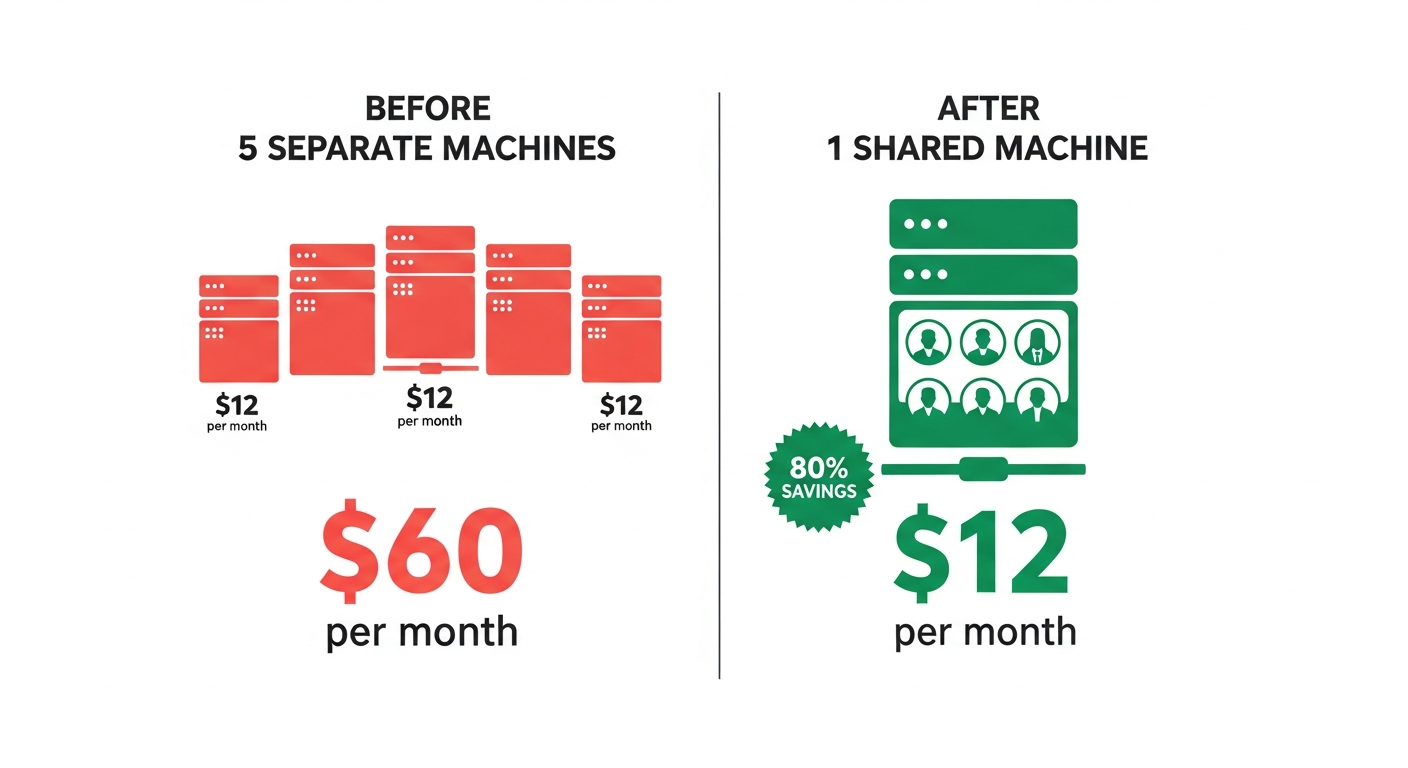
- Infrastructure (VPS/hardware/backups)
- Model spend (tokens + caching behavior)
- Labor (setup + weekly operations)
- Security overhead (access controls, skill review, monitoring)
- Risk-adjusted costs (downtime + incident response)
Infrastructure is visible. The other four usually decide the winner.
Why self-hosting can look cheaper than it is
Self-hosting brings real benefits:
- deeper control
- local workflow integration
- flexible architecture
But it also creates recurring obligations:
- upgrades and patching
- heartbeat and model-policy tuning
- token cost hygiene
- security guardrails
- failure recovery
If no one owns these, costs drift upward and reliability drops.
Team-size decision lens
1-3 person teams
Self-hosting can win if you are already infra-native. Managed usually wins if you are time-constrained.
5-15 person teams
Coordination overhead rises quickly in DIY setups. Managed usually wins unless platform operations are already mature.
30 person teams
Self-hosting can be strategic with dedicated platform ownership. Without that, risk and variance usually erase infra savings.
Security overhead is part of TCO
Security is not a setup checkbox. It is an operating function.
Recurring work includes:
- skill source review
- access policy audits
- secret hygiene
- runtime monitoring
Ignoring this line item makes TCO projections unrealistic.

The operating model question
Before choosing architecture, answer this:
“How many hours per month can high-leverage people spend operating AI infrastructure?”
If the answer is unclear, managed is typically the lower-risk first move.
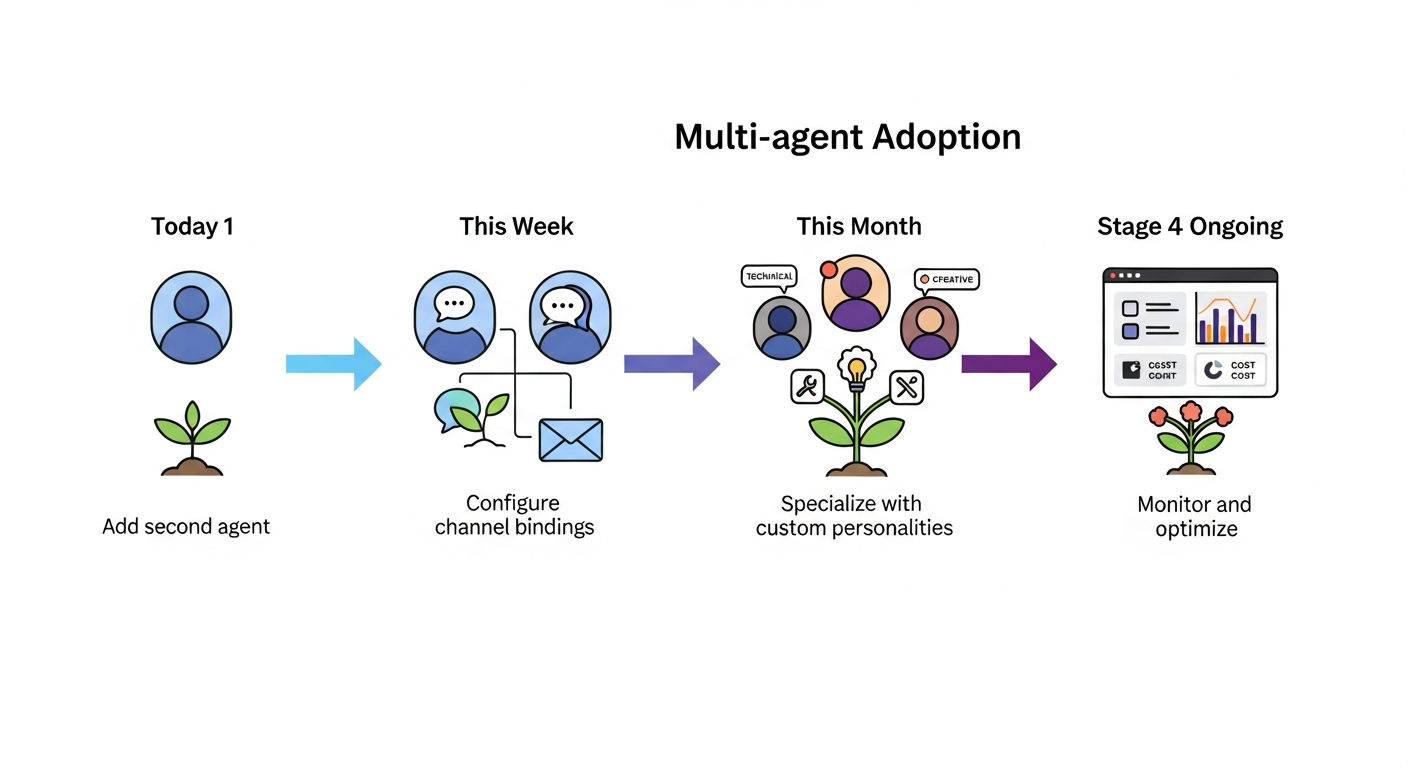
Recommended rollout pattern
- Start managed for speed and predictable operations.
- Instrument usage, failures, and spend.
- Move only high-value workflows to self-hosted when required.
This sequence keeps execution velocity high while preserving long-term optionality.

Conclusion
Self-hosting is not wrong. Managed is not always cheaper.
But for most 1-30 person teams, the winner is determined by operational maturity, not by monthly server cost.
For most teams, weekend maintenance is the hidden tax that kills ROI.