
Nvidia NemoClaw: the open-source platform that could define enterprise AI agents

How a $3 trillion hardware company plans to own the agent deployment stack by giving it away
On March 9, 2026, WIRED reported that Nvidia is preparing to launch NemoClaw – an open-source AI agent platform for enterprises. It includes built-in security and privacy tools, runs on AMD and Intel (not just Nvidia GPUs), and is already being pitched to Salesforce, Cisco, Google, Adobe, and CrowdStrike ahead of its expected full reveal at GTC 2026 on March 16.
I went through 14 sources covering the announcement, technical architecture, market data, competitive landscape, and crypto market response. Here’s what NemoClaw is, why it matters, and what it means if you’re building in the AI agent space.
The OpenClaw problem
To understand NemoClaw, you need to understand the problem it’s solving.
OpenClaw – the open-source AI agent framework created by Peter Steinberger – became the fastest-growing project in GitHub history. It hit 247,000+ stars in under four months. Jensen Huang himself noted that OpenClaw achieved adoption in three weeks that “took the Linux kernel 30 years to reach.”
But OpenClaw was built for developers and power users, not enterprises. The security track record made that painfully clear:
- Meta banned OpenClaw from employee machines after an agent mistakenly deleted an executive’s emails
- An unsecured database was discovered that allowed anyone to impersonate any agent on the platform
- Malicious prompt-injection attacks were documented across multiple deployments
Meanwhile, enterprise demand for AI agents was through the roof. Gartner says 40% of enterprise applications will embed task-specific AI agents by the end of 2026, up from less than 5% in 2025. But 73% of organizations cited integration challenges as their primary barrier, and 75% said security and compliance was their top requirement.
The enterprise market wanted the product. OpenClaw couldn’t be it. NemoClaw is Nvidia’s bet that it can.
What NemoClaw actually is
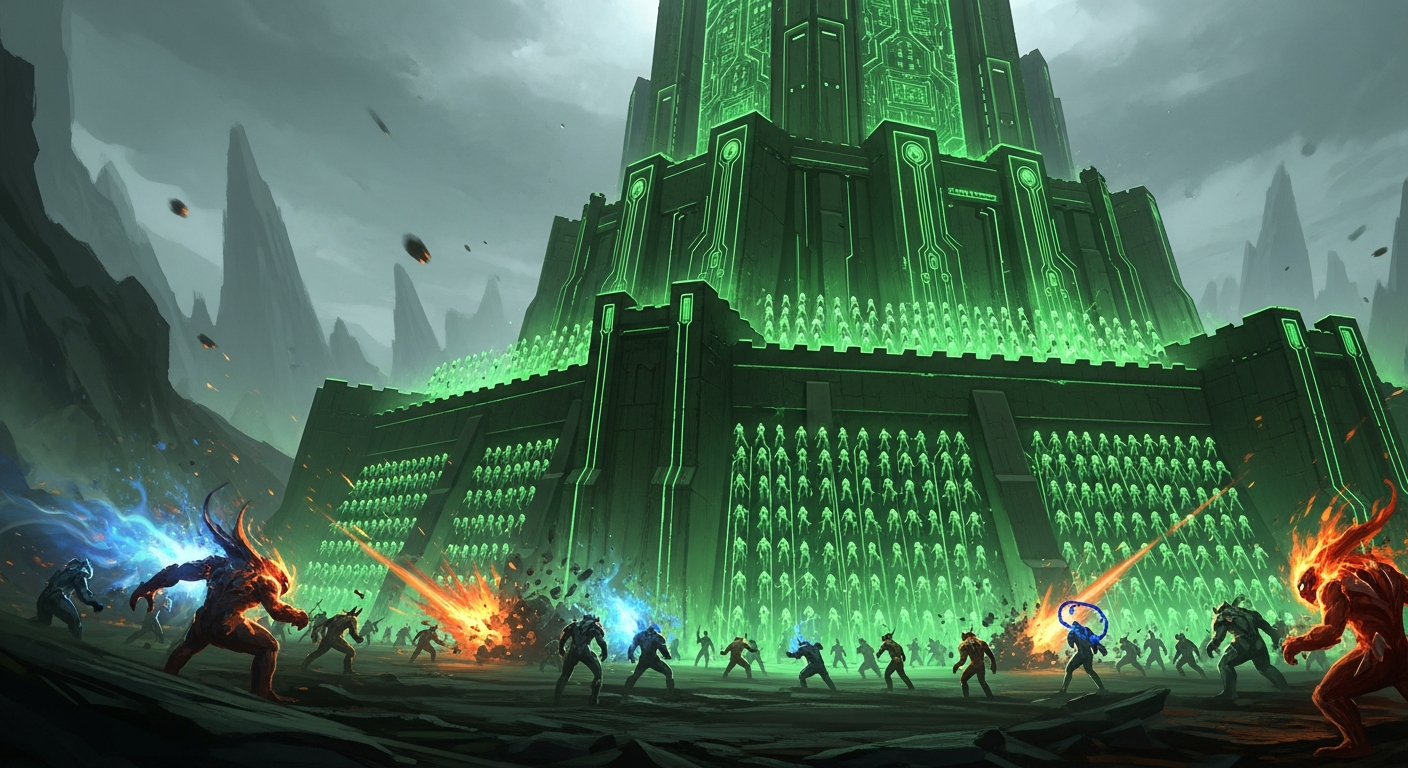
NemoClaw is an open-source platform for building and deploying enterprise AI agents. Based on available reporting:
Multi-agent orchestration: NemoClaw uses a supervisor + worker delegation model. Supervisor agents distribute tasks to specialized workers, enabling complex multi-step workflows across enterprise systems.
Enterprise security: Built-in audit logs, fine-grained permissions, prompt injection safeguards, and behavioral monitoring. Compliance tooling aligned with SOC 2, ISO 27001, and GDPR.
Hardware agnosticism: Despite being an Nvidia product, NemoClaw runs on AMD, Intel, and CPU-only environments. A deliberate departure from Nvidia’s traditional CUDA lock-in.
Nvidia ecosystem integration: NemoClaw ties together three existing Nvidia components: NeMo (model training and agent reasoning), Nemotron (inference), and NIM (deployment optimization).
Privacy-first design: Data stays under organizational control without mandatory cloud dependencies. Every enterprise can inspect, audit, and extend agents while retaining control over data and decision boundaries.
Tool integration: Native support for browser automation, code execution, database connectivity, and API integrations.
Nivi digital mascot: Nvidia also introduced “Nivi,” a customizable digital avatar that serves as the visual frontend for enterprise agents. It shows confusion when an agent is uncertain, celebrates successful task completion. Sounds gimmicky, but it addresses a real enterprise adoption problem: invisible agents are hard to trust. People need something to look at.
The Nemotron 3 Super connection

NemoClaw is paired with Nemotron 3 Super, which may be the most capable open-weight model released to date:
- 120 billion total parameters, 12 billion active during inference (Latent Mixture-of-Experts)
- Native 1 million-token context window – pretrained, not fine-tuned, using Mamba-2 state-space layers for linear-time sequence processing
- Hybrid Mamba-Transformer-MoE architecture in a six-layer repeating block
- 2.2x faster throughput than OpenAI’s GPT-OSS 120B and 7.5x faster than Alibaba’s Qwen 3.5-122B
- Multi-Token Prediction enabling up to 3x speedups for structured generation (code, tool calls)
- Trained on 25 trillion tokens using NVFP4 (native 4-bit floating-point)
- Fully open: weights, datasets, training recipes, and 21 reinforcement learning configurations all published
The 1M-token context is particularly relevant for agent systems. Nvidia identifies two problems in multi-agent architectures: the “thinking tax” (expensive reasoning for every sub-task) and “context explosion” (multi-agent systems generating 15x more tokens, causing goal drift). Nemotron 3 Super’s extended context helps with both by giving agents persistent long-term memory.
Nvidia is backing this model strategy with $26 billion over five years in open-weight frontier models – a response to Chinese open models (particularly Qwen and DeepSeek) going from 1.2% to roughly 30% of global usage in just one year.
The strategy: give away the software, sell the hardware
NemoClaw being open-source and hardware-agnostic seems strange for a company that makes its money selling GPUs. But follow the logic:
- NemoClaw is free – enterprises adopt it without procurement friction
- Every NemoClaw agent deployment requires inference compute
- NemoClaw integrates natively with NeMo, NIM, and Nemotron – all Nvidia-optimized
- Running on AMD works, but running on Nvidia GPUs with the full stack is the optimized path
- As agent workloads scale, enterprises drift toward Nvidia hardware
The software is the funnel. The hardware is the product.
This is Meta’s Llama playbook, but extended to the entire deployment stack. Meta open-sourced a model. Nvidia is open-sourcing a model AND the orchestration platform AND the inference layer AND the training framework.
As IBTimes put it, Nvidia is “giving away the software layer at the precise moment agentic AI becomes mission-critical” to “secure control over the inference stack, observability tools, memory management, and optimization layers.”
The partnership strategy
Nvidia’s approach to NemoClaw partnerships tells you a lot. They went directly to Fortune 500 incumbents: Salesforce, Cisco, Google, Adobe, CrowdStrike. No startups. No developer community outreach, at least not yet.
This is a bet on distribution over community. OpenClaw won by capturing individual developers first. NemoClaw is trying to win by capturing enterprise software companies who’ll embed NemoClaw into their existing products – reaching millions of enterprise users through partners rather than direct adoption.
The risk is real: Nvidia could win enterprise deals but lose developer mindshare. OpenClaw’s 247K stars came from individual developers trying it on their laptops. If NemoClaw requires an enterprise sales cycle to evaluate, building the grassroots community that drives long-term platform adoption will be hard.
Competitive landscape

The AI agent framework space currently has 50+ players. NemoClaw’s entry accelerates consolidation:
Platform-backed: NemoClaw (Nvidia), Microsoft Agent Framework (merged AutoGen + Semantic Kernel), OpenAI Frontier, Google Vertex AI Agents
Open-source community leaders: OpenClaw (247K stars, now at OpenAI foundation), LangGraph (24.8K stars, 34.5M monthly downloads), Dify (129K stars)
Startup challengers: CrewAI (multi-agent specialist), Mastra (TypeScript-first, YC-backed, 1.77M NPM downloads), Flowise (visual builder)
Crypto-native: Platforms like Augmi targeting wallet-based agent identity and autonomous transactions
The prediction across multiple sources: fewer than 10 frameworks will survive through 2027. The differentiator won’t be capabilities (increasingly commoditized) but the ability to solve the “last mile” of enterprise deployment – security, compliance, monitoring, and integration with existing systems.
The crypto market response
NemoClaw triggered a 4.8% rally in AI-token market cap, reaching about $14.17 billion and outpacing the broader CoinDesk 20 index (up 2.86%). Bittensor (TAO), NEAR Protocol, Internet Computer (ICP), and VIRTUAL token all posted gains.
The crypto market reads NemoClaw as validation: if enterprises deploy millions of AI agents, those agents will eventually need to transact on their own. Agent wallets, autonomous payments, and token-based agent economics become necessary infrastructure.
Worth noting: NemoClaw itself has zero crypto features. No agent wallets. No autonomous transactions. No token economics. The crypto-native agent layer remains an open market.
What this means for agent platform builders
If you’re building in AI agent deployment, NemoClaw is a market-defining moment.
The market is confirmed. When Nvidia ($3T+), Microsoft, Google, and OpenAI are all building enterprise agent platforms simultaneously, the debate about whether enterprises will deploy AI agents is over.
The enterprise bar just went up. Every agent platform will now be measured against NemoClaw’s security, compliance, and orchestration capabilities. “Enterprise-ready” now means SOC 2 alignment, audit logging, prompt injection protection, and multi-agent orchestration by default.
The market is splitting. Enterprise infrastructure (NemoClaw, Microsoft) is separating from developer/SMB platforms (self-serve deployment, crypto-native payments, consumer agents). Different segments, different needs, different buying patterns.
The crypto-native gap is real. NemoClaw doesn’t address agent economics, autonomous transactions, or wallet-based identity. For crypto-native agent platforms, this gap is the opportunity. Nvidia builds the deployment infrastructure. Crypto builds the economic rails for agents to transact, earn, and manage value on their own.
What happens next
Jensen Huang’s GTC 2026 keynote on March 16 will be the formal NemoClaw reveal. Based on reporting, expect:
- Full platform demo with live enterprise partner integrations
- Nemotron 3 Super benchmark comparisons
- Details on the $26 billion open-model investment roadmap
- Potential new inference chip announcements
- First confirmed enterprise NemoClaw deployments
The agentic era has been anticipated for over a year. With NemoClaw, Nvidia is attempting to ship the operating system for it – betting that owning the deployment layer will be as valuable as owning the GPU layer that powered the training era.
Whether that bet pays off is an execution question. But the signal is clear: enterprise AI agent deployment is no longer being explored. It’s being fought over by the largest technology companies on earth.
This analysis was produced on March 13, 2026, drawing from 14 sources including WIRED, CNBC, Nvidia Developer Blog, Gartner, CoinDesk, and competitive analysis from multiple technology publications.