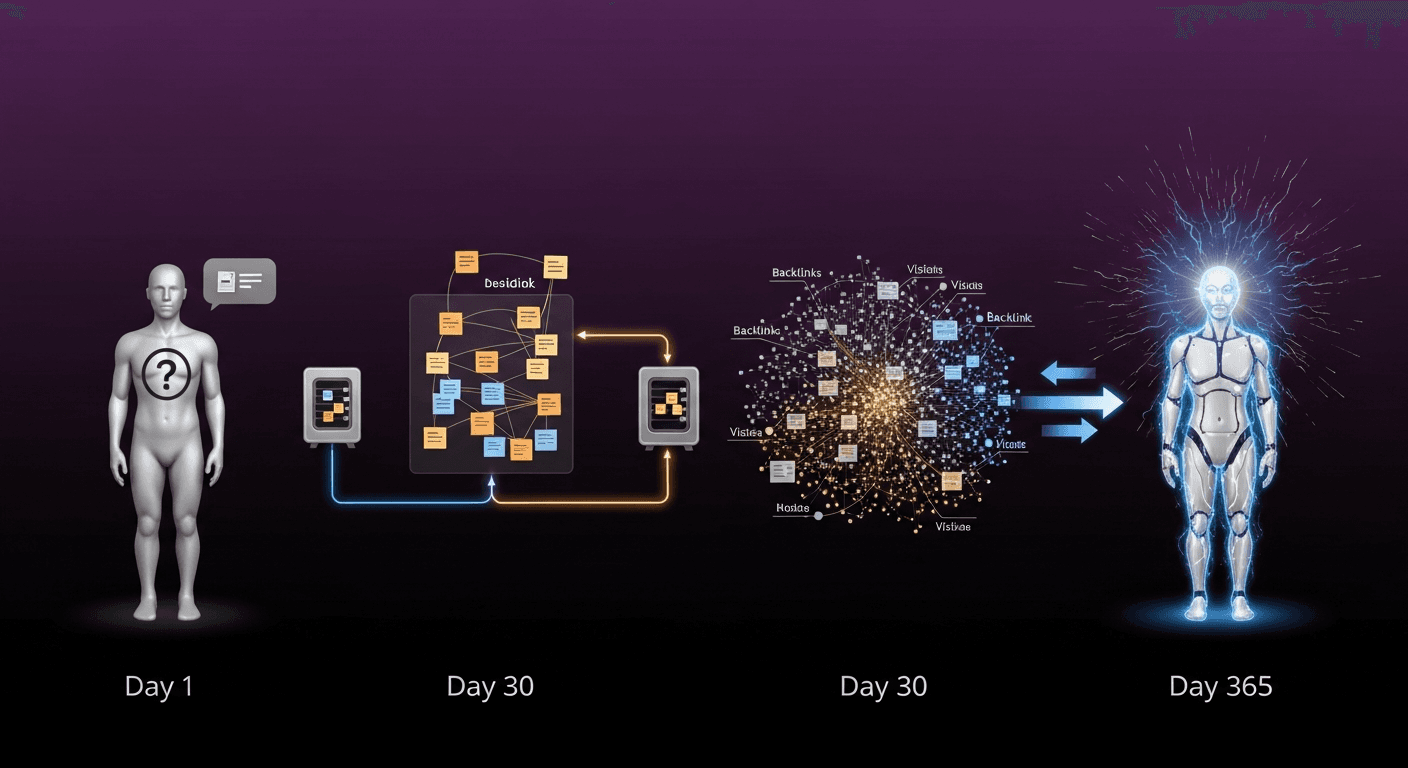
How AI Agents Learn: The Obsidian Knowledge Graph Pattern
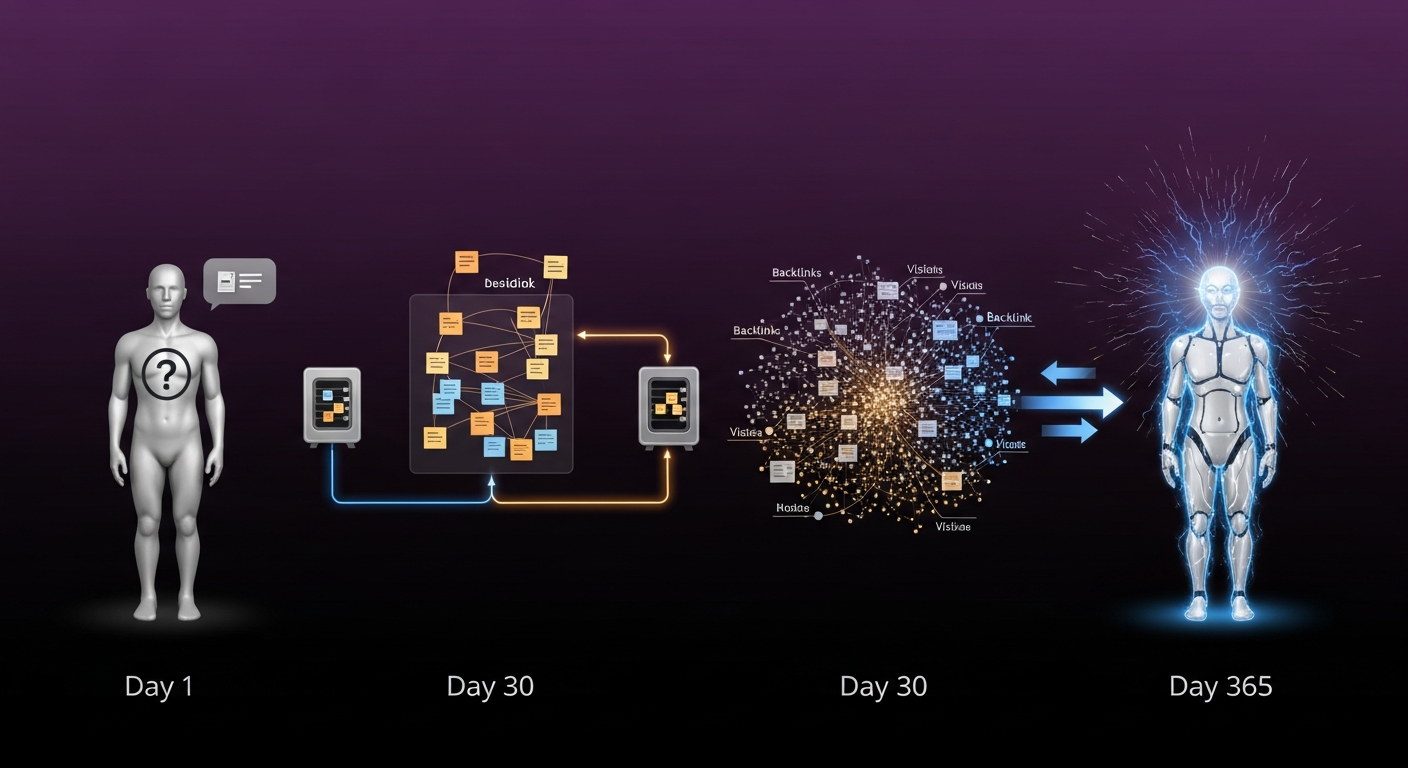
The most powerful AI agents aren’t the ones with the biggest models. They’re the ones with access to good information.
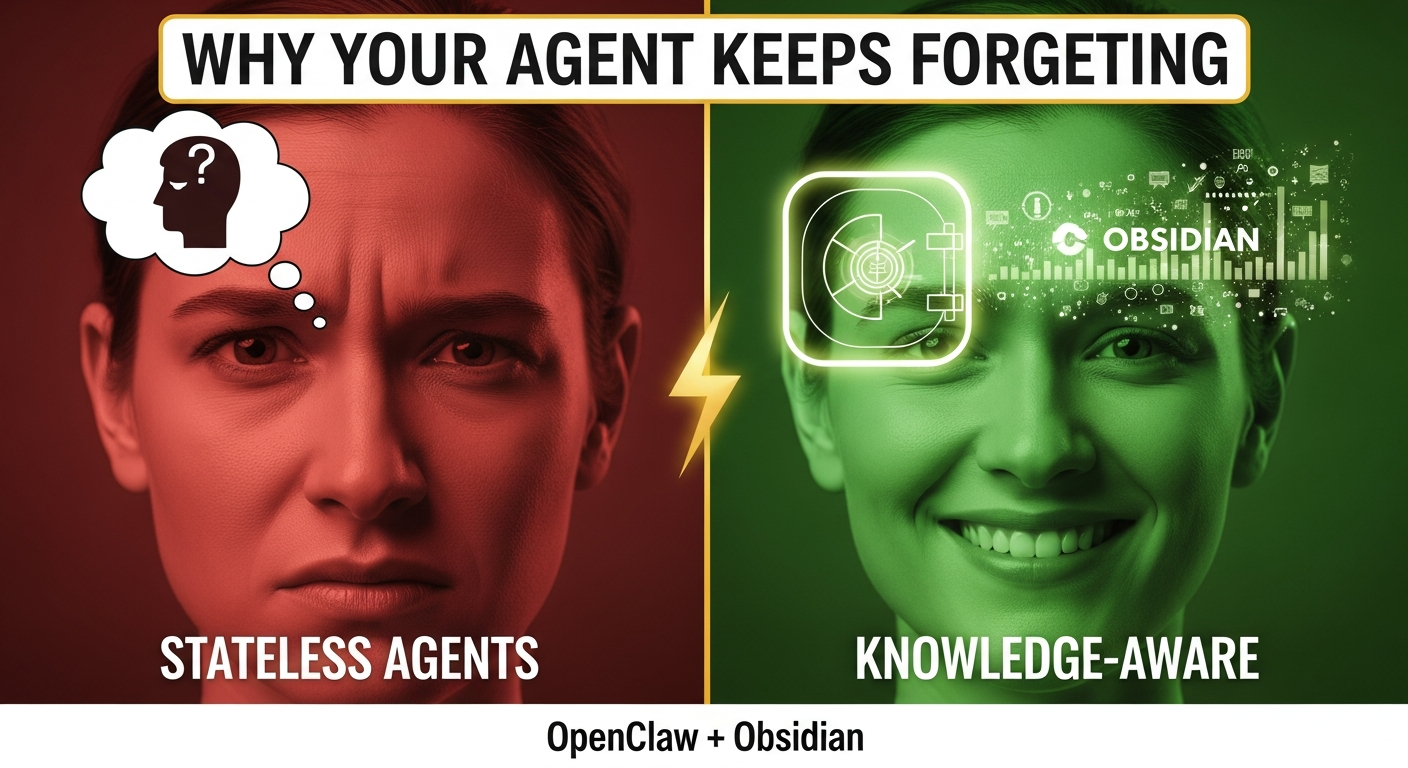
Most AI agents today are amnesics. You ask ChatGPT a question, get an answer, then ask something related five minutes later. It’s like talking to a stranger. No memory. No context. Nothing from the previous conversation carries over.
This is fine for standalone questions. “What’s the capital of France?” doesn’t need memory.
But it breaks for anything practical:
- Portfolio managers asking “Should I sell my ETH?” when the agent has no idea why they bought it, what their timeline is, or what they can afford to lose.
- DAO treasurers asking “How should we allocate?” when the agent doesn’t know the governance rules, past decisions, or what happened last time.
- Researchers asking “What’s the pattern?” when the agent hasn’t seen their research, read their notes, or worked through their thinking.
The agent isn’t dumb. Your context is the problem. You’re the bottleneck.
Why This Matters: Knowledge Is a Moat
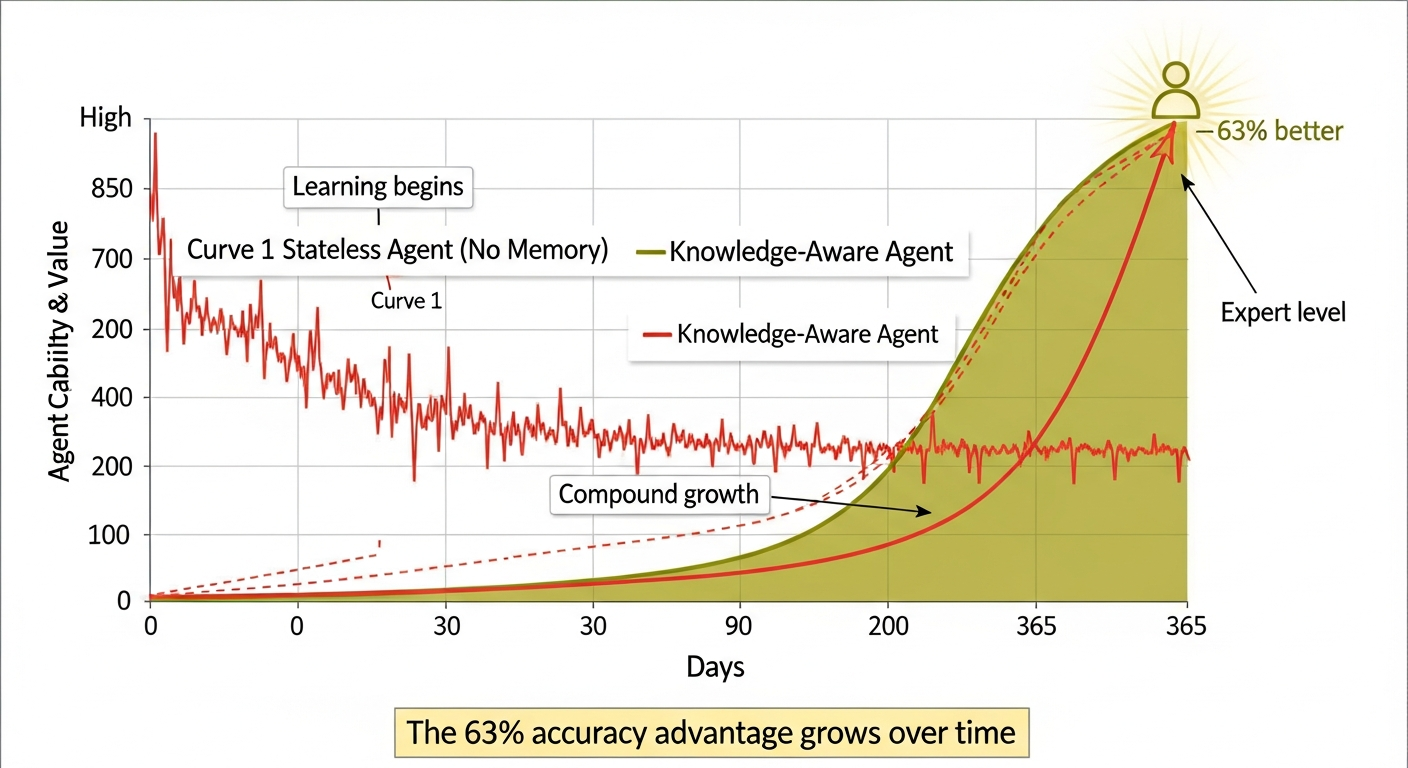
Research on knowledge-augmented agents shows a 63% performance improvement over baseline agents.
That gap exists because information compounds. When an agent can read your vault—your decisions, research, strategies—it stops guessing and starts reasoning from your actual context. It can understand what you’ve already tried, remember what failed, and think like someone who knows your domain instead of a generalist.
The mechanic is simple: better decisions, better outcomes, more valuable agent, stickier user relationship. Each agent interaction makes the next one smarter.
Three Implementation Approaches (And Which One to Start With)
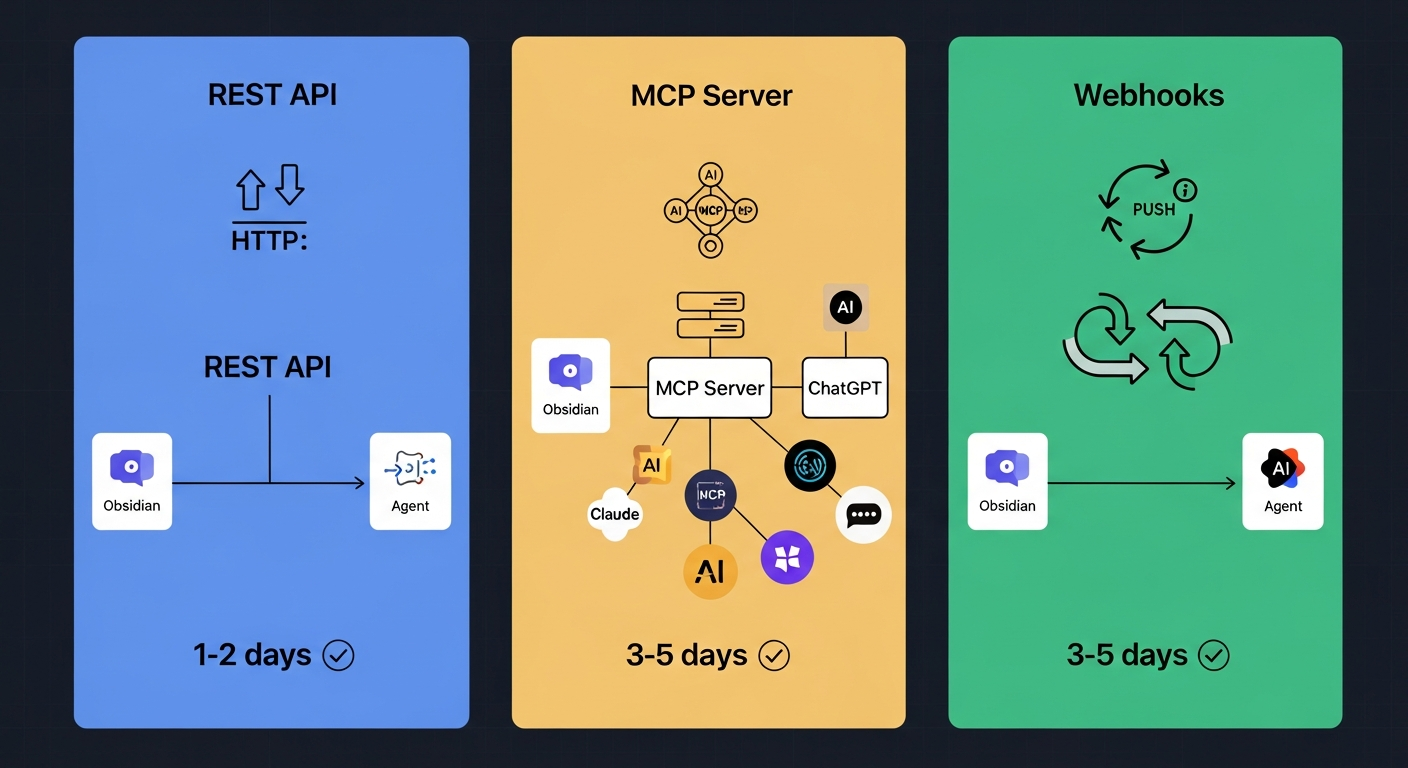
We researched every public integration of agents + knowledge management systems. Three patterns emerged, each with distinct trade-offs:
Approach 1: REST API (Fastest MVP)
How It Works: Obsidian Local REST API plugin exposes HTTP endpoints. Agent calls /vault/search to query notes.
Timeline: 1-2 days
Strengths:
- Simple to understand and implement
- Well-documented (obsidian-local-rest-api project is mature)
- Good enough for MVP validation
Weaknesses:
- REST API is generic, not designed for agents
- Obsidian-specific (won’t work with Claude, ChatGPT)
- May become legacy if MCP becomes standard (likely by Q2 2026)
Best For: Validating market demand with speed
Approach 2: MCP Server (Future-Proof)
How It Works: The Model Context Protocol (MCP) is a standard interface that sits between any AI tool and Obsidian. The agent talks to the MCP server instead of calling Obsidian directly.
Timeline: 3-5 days
Strengths:
- Works with Claude, ChatGPT, and future tools
- Same implementation serves multiple AI platforms
- MCP is becoming the standard, so you don’t rebuild later
- Community has already solved the hard parts
Weaknesses:
- More complex than REST (you need to understand the protocol)
- Longer initial setup than REST API
- More infrastructure to maintain
Best For: If you’re planning to stick with this for a year or more
Approach 3: Webhooks (Real-Time Knowledge Capture)
How It Works: Obsidian Post Webhook plugin sends notes outbound. Agents receive and process them. Two-way architecture.
Timeline: 2-3 days
Strengths:
- Enables real-time knowledge capture (agent learns immediately)
- Supports “note-taking triggers agent action” workflows
- Simple webhook delivery model
Weaknesses:
- Webhook reliability requires careful design (retries, timeouts)
- Better for notifications than agent querying
- Alone, insufficient for full integration
Best For: Enabling knowledge capture workflows (Phase 2+)
Our Recommendation: Hybrid Progression
MVP (Now): REST API for speed. Validate market demand. Get early users.
Phase 1.5 (Q2 2026): Migrate to MCP. Add webhooks. Become the standard approach before competitors catch up.
Phase 2+ (Q3 2026+): Add crypto integration, agent wallets, marketplace features.
Why This Matters: Obsidian’s Secret Advantage
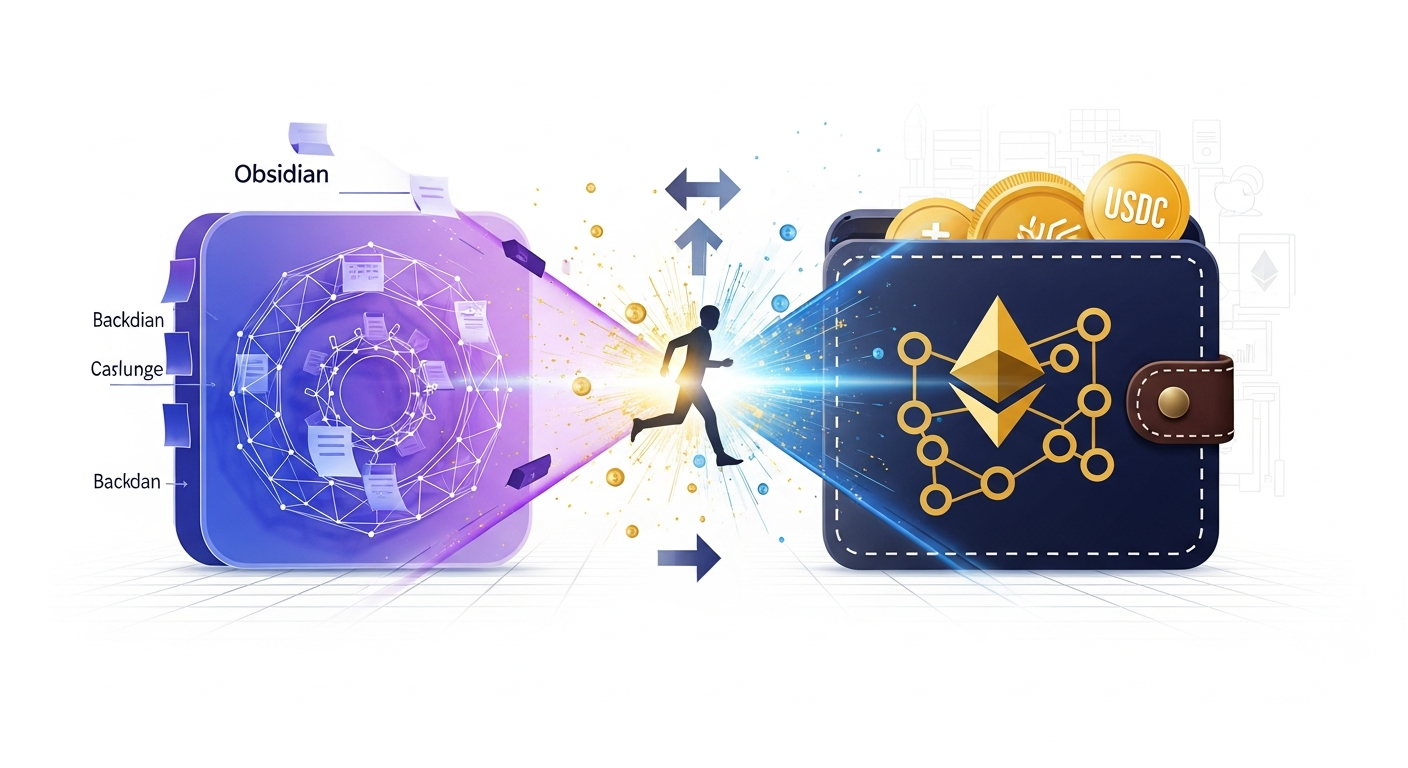
Obsidian’s architecture is accidentally perfect for agent memory. The zettelkasten method—atomic notes, backlinks, metadata—mirrors exactly what agents need:
- Episodic memory (what happened): Your notes and conversation history
- Semantic memory (what you know): Backlinks and tags showing how things relate
- Procedural memory (how to do things): Templates and workflows
The zettelkasten was designed for human memory augmentation. Turns out it works just as well algorithmically.
Market Validation: Why This Is Happening Now
This isn’t theoretical. Obsidian released “Obsidian Skills” in 2026, signaling the company is betting on this direction. GitHub has 10+ projects doing knowledge + agents the same way. AWS and others are building agent-knowledge systems at scale.
The question moved from “can we do this?” to “who does it best?”
Augmi’s Unfair Advantage: Crypto-Native Agents
No one is building agents that know both your knowledge vault and your crypto holdings.
Obsidian has over a million users. The crypto community is sophisticated. The incentives are obvious. But the combination doesn’t exist yet. Portfolio managers need agents that understand both their strategy (in the vault) and their actual holdings. DAO treasurers need agents that know governance (in the vault) and crypto (on chain). DeFi researchers need agents that understand both their research notes and the protocols they’re trading.
That’s Augmi’s opening. There’s maybe 18 months before the obvious combinations get built. The category is young enough to own.
Use Cases That Only Augmi Can Build
Portfolio Intelligence: Your agent reads your investment thesis (in the vault), checks your holdings, and suggests rebalancing. It knows what you wrote about when to sell and whether this is the right time.
DAO Treasury Optimization: Your agent knows the governance rules (from your notes) and the current holdings. It can suggest allocations or execute proposals without needing a human to translate between the vault and the blockchain.
DeFi Research & Execution: Your agent reads your research, spots opportunities matching your strategy, and executes the trade. Not generic AI—your AI, trained on your vault.
Security Done Right (Not Security Theater)
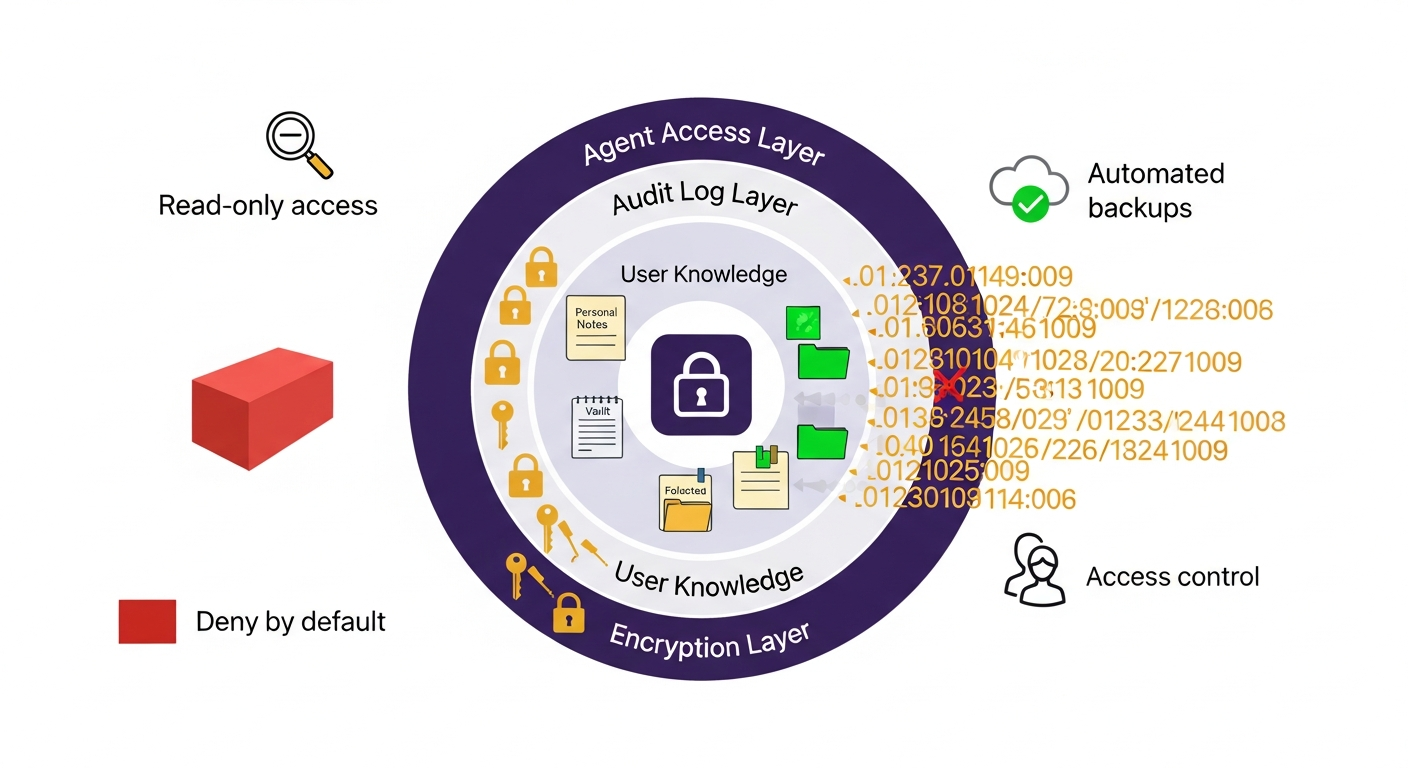
The obvious concern: “If agents can read my vault, what stops them from leaking secrets?”
Fair question. The architecture has to be right. From the research, the standard approach is:
- Granular access - agents can only read specific notes or folders you choose
- Read-only - agents search and read, nothing more. No write or delete.
- Audit logging - every read gets logged so you know what was accessed when
- Backups - permanent, decentralized copies so you never lose access
- Vault separation - your sensitive personal notes stay in a separate vault from the agent knowledge
This is actual security, not security theater.
Timeline and Roadmap
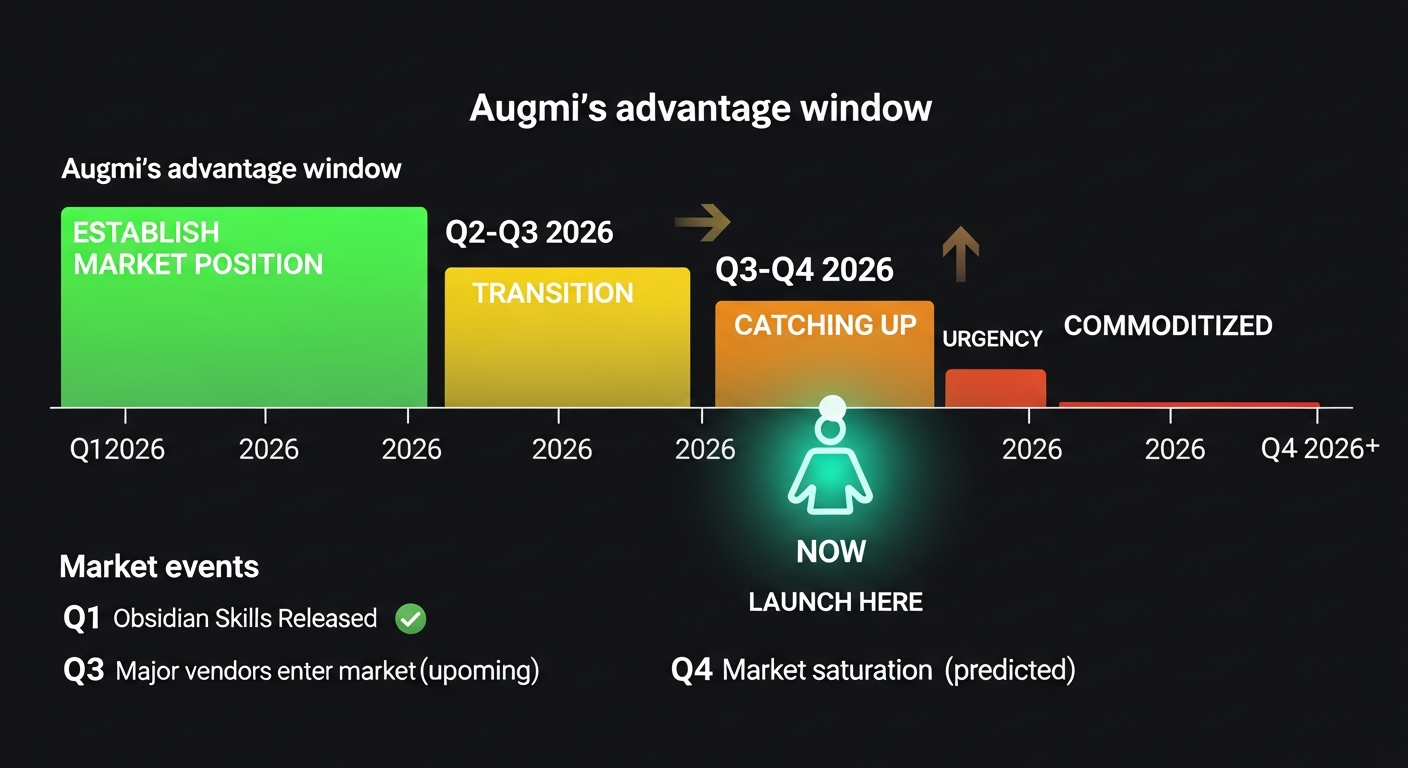
MVP (March-April 2026): REST API connection. Search your vault. Read-only. Target early crypto users.
Phase 1.5 (May-June 2026): Migrate to MCP (REST API stays). Add granular permissions and audit logging. Keep the early users while onboarding technical teams.
Phase 2 (July-September 2026): Agent wallets. Agents can hold USDC and execute transactions. Now your DAO treasurer can give an agent signing authority for treasury decisions.
Phase 3 (Q4 2026+): Agents discover and learn from other agents’ vaults. Economic incentives emerge. Specialized agent types (risk agent, tax agent, research agent).
What This Means for You
If you’re a knowledge worker, you stop repeating yourself to every new tool. The agent learns your domain.
If you manage crypto, your agent knows both your strategy and your holdings. It executes what you would have decided anyway, but faster and at 3am.
If you’re building products, knowledge is the thing that can’t be replicated. Agents with good context become sticky. That’s a moat.
If you’re on a team, understand that Obsidian is becoming the operating system for autonomous agents. Plan accordingly.
Getting Started
The MVP launches Q1 2026. To get ready:
- Organize your Obsidian vault using the zettelkasten method (atomic notes, backlinks)
- Document knowledge you’d want an agent to understand
- Think about what an agent that knows your vault would actually do for you
- Join the waitlist
The agents are coming. The ones with the best knowledge will be the most useful.
Read the full research on agent + knowledge architectures and the competitive landscape. [Link]
Stay updated on launch, early access, and implementation guides. [Link]