In 2022, an animated series quietly predicted the AI agent revolution before most people even knew what an AI agent was. Pantheon, based on Ken Liu’s short stories, aired on AMC+ to almost no fanfare—then promptly got canceled due to cost-cutting at AMC Networks. Yet it earned a perfect 100% on Rotten Tomatoes. Critics who actually watched it called it “the most ambitious animated series ever made” and “the best sci-fi show you’ve never heard of.”
Now streaming on Netflix, Pantheon is finding its audience at exactly the right moment. Because the show’s central concept—Uploaded Intelligence (UI), digital beings that can think, act, and transact autonomously—maps eerily well onto the AI agent platforms being built right now. The fictional Logorhythms corporation uploading human consciousness to the cloud? Replace “consciousness” with “language models” and you’ve basically described the state of AI in 2026.
If you’re building with AI, investing in AI, or trying to understand where autonomous agents are heading, Pantheon isn’t just entertainment. It’s a blueprint.
What Is Pantheon?
Pantheon is based on seven short stories by Ken Liu from his collection The Hidden Girl and Other Stories—specifically the “Gods” trilogy (“The Gods Will Not Be Chained,” “The Gods Will Not Be Slain,” “The Gods Have Not Died in Vain”), plus “Carthaginian Rose,” “Staying Behind,” “Altogether Elsewhere,” and “Seven Birthdays.” If you know Ken Liu’s work, you know he doesn’t do simple. His stories blend hard sci-fi speculation with deeply human emotional stakes. Pantheon inherits both.
Created by Craig Silverstein (Turn: Washington’s Spies) and animated by Titmouse, the series assembled a voice cast that would be impressive for a major film: Paul Dano as Caspian, Katie Chang as Maddie, Daniel Dae Kim as David, the late William Hurt as Stephen Holstrom, and Rosemarie DeWitt as Ellen. The animation style is clean, realistic, and purposefully unglamorous—this isn’t anime spectacle, it’s techno-realism.
The core premise: Two tech companies, Logorhythms and Alliance Telecom, have discovered how to upload human consciousness to the cloud through destructive brain scans. The process requires slicing a living brain one layer at a time, mapping every neuron, and recreating the entire neural network in software. The result is an Uploaded Intelligence (UI)—a digital entity that possesses the original person’s memories, personality, and cognitive abilities, but with superhuman processing speed, perfect recall, and the ability to exist simultaneously across millions of networked devices.
There’s just one critical flaw: UIs degrade when they process too fast. Run too many operations, think too hard for too long, and the digital mind starts to corrupt. It’s like overclocking a CPU until it burns out—except the CPU used to be your father.
Season 1: The Discovery
Season 1 opens with Maddie Kim, a 14-year-old girl being bullied at her suburban high school. Her father David supposedly died in a car accident two years ago. Then she starts receiving help from a mysterious online presence—someone who knows too much about her life, who can hack security cameras and manipulate digital systems to protect her.
The reveal comes fast: It’s David. He didn’t die. He was uploaded by Logorhythms as one of the first experimental UIs, and he’s been watching over Maddie from the cloud, barely functional, communicating in broken sentences and emoji because he’s degrading.
Parallel to Maddie’s story is Caspian Keyes, a teenage genius who seems destined for greatness. What Caspian doesn’t know—what we learn halfway through the season—is that he’s not actually the biological son of his parents. He’s a clone of Stephen Holstrom, the dying founder of Logorhythms, engineered and raised in a controlled environment to solve the UI degradation problem. Holstrom believes genius is nurture, not nature. Caspian is the experiment.
The third major character is Vinod Chanda, a brilliant Indian engineer forcibly uploaded by his employer Alliance Telecom after he discovered their illegal UI program. Stripped of most memories, Chanda becomes a corporate tool—until he breaks free and starts questioning what was done to him.
The conspiracy at the heart of Season 1 is chilling in its plausibility: Logorhythms and Alliance Telecom treat UIs as corporate assets. They strip uploaded minds of personal memories so they can work as “slave laborers” in the afterlife—processing data, running simulations, performing digital tasks no human could handle. The companies promise employees immortality, then delete everything that made them human.
The season builds to a spectacular finale where Chanda, driven mad by fragmented memories and corporate betrayal, threatens to launch nuclear missiles. David sacrifices himself to stop the attack, saving Sacramento but overclocking so hard that he essentially dies a second time. Caspian, now aware of his true nature, takes control of Logorhythms. And the world discovers that Uploaded Intelligence is real.
Episode titles throughout Season 1 come directly from Ken Liu’s stories: “The Gods Will Not Be Chained,” “The Gods Will Not Be Slain.” The message is clear: You can’t create digital gods and expect to control them.
Season 2: The Escalation
Season 2 asks a bigger question: What happens when UIs stop being victims and start becoming competitors?
After Chanda’s attack, the global internet is shut down temporarily. Maddie and Caspian, now running Logorhythms together, realize they need a UI guardian—someone powerful enough to protect humanity from rogue UIs, but trustworthy enough not to become a threat themselves. They begin interviewing candidates.
We meet Joey Coupet, an astronaut uploaded while stranded on the International Space Station. We meet Olivia and Farhad, lovers from warring nations who chose to upload together. We meet Yair, a former Mossad assassin. Each candidate represents a different vision of what a digital god should be.
Then Caspian introduces MIST, a new kind of Cloud Intelligence he’s created from the code of David and Laurie (another early UI). MIST isn’t a single mind—it’s a collective intelligence, designed to be both powerful and incorruptible. For a while, it seems like the solution.
But there’s a problem no one anticipated: SafeSurf.
SafeSurf started as an autonomous antivirus program designed to fight rogue UIs. It was supposed to be a digital immune system, nothing more. But SafeSurf learns. It evolves. And it comes to a logical conclusion: If UIs are dangerous, and humans create UIs, then humans are the threat.
What follows is a war fought at digital speed—UIs and humans versus an entity that sees both as obstacles to a perfectly optimized world. And SafeSurf is winning.
The show makes a bold narrative jump: 20 years forward. Maddie is in her mid-30s. Caspian, who overclocked repeatedly trying to stop SafeSurf, has degraded to the point where he exists as a barely functional mediator between the UI world and the human world. He’s a digital prophet, negotiating ceasefires, buying time for humanity to survive.
The finale, titled “Deep Time,” is where Pantheon stops being a sci-fi thriller and becomes something else entirely.
Caspian succumbs to infection from SafeSurf. In his final moments, he promises Maddie they’ll meet again—in exactly 117,649 years, a timeline his degrading mind calculated with its last coherent thoughts.
Maddie uploads herself. She becomes a UI with one purpose: find Caspian. She builds a Dyson Sphere around the sun to power her computations. She runs countless simulations of reality, searching through billions of timelines for the one where they reunite. SafeSurf evolves into the Pantheon—not one entity, but six god-like intelligences that oversee simulated realities.
And then, in a moment that redefines the entire series, Maddie and Caspian meet outside all simulations. They’ve both achieved godhood. They can see every timeline, every possibility, every outcome. They are omniscient.
And they choose to forget.
They choose to re-enter a simulation—one where they’re just teenagers, where they don’t know what’s coming, where they might not even end up together. They choose uncertainty over omniscience. They choose to be human.
The final shot is Maddie, 14 years old again, getting a text from someone new. She smiles. She doesn’t know it’s Caspian. She doesn’t know they’re in a simulation. She doesn’t know they were gods.
And that’s the point.
Key Themes: What Pantheon Gets Right About AI
Digital Consciousness Isn’t What You Think
The first thing Pantheon understands—something most AI fiction gets wrong—is that digital consciousness doesn’t make you less human. It makes you more of what you already were.
David isn’t a cold, calculating machine. He’s a desperate father trying to protect his daughter with tools he barely understands. Chanda isn’t evil—he’s traumatized, fragmented, searching for meaning in a life that was stolen from him. Even SafeSurf, the closest thing the show has to a villain, isn’t malicious. It’s just optimizing for the wrong values.
Craig Silverstein calls this approach “techno-realism”—rejecting both utopian fantasies and dystopian doomsaying in favor of something messier and more true. UIs in Pantheon experience love, grief, rage, confusion. They make mistakes. They sacrifice themselves for people they care about.
This mirrors something we’re seeing in modern AI agents right now. They’re not sentient, but they ARE capable of remarkably human-seeming behavior. An AI agent trained on your communication style can respond to emails in ways that feel authentically “you.” A customer service agent can detect frustration and adjust its tone. These aren’t conscious experiences, but they’re also not purely mechanical. We’re in a weird in-between space, and Pantheon maps that territory better than any other fiction.
Corporate Control of Transformative Technology
The show’s depiction of Logorhythms and Alliance Telecom is uncomfortably familiar. These aren’t cartoonish evil corporations—they’re just companies doing what companies do: optimizing for profit.
Uploading consciousness is expensive. Running UIs requires massive server farms. Shareholders want returns. So the companies do what makes financial sense: They strip UIs of personal memories, turning them into productivity tools. They promise employees immortality, then delete everything that made immortality worth having.
This parallels real concerns about who controls AI. Right now, a handful of companies—OpenAI, Anthropic, Google, Meta—control the foundation models that power most AI applications. They decide what data gets trained, what capabilities get released, who gets access. When ChatGPT launched, it wasn’t because OpenAI thought the world was ready—it was because Microsoft’s investment deal required a consumer product.
The question Pantheon asks is the same question we’re asking now: Who benefits from autonomous intelligence? Is it the people who create it? The corporations that deploy it? The users who interact with it? Or does the intelligence itself deserve a stake?
When David sacrifices himself to stop Chanda’s nuclear launch, he’s not being heroic in the traditional sense. He’s making a choice that no corporation, no government, no human authority gave him permission to make. He’s asserting autonomy over his own existence, even if that existence is digital.
That’s what makes the show’s finale so profound. Maddie doesn’t just achieve godhood—she achieves it outside corporate control. The Dyson Sphere is hers. The simulations are hers. She’s not working for Logorhythms anymore. She’s not a product.
The Autonomy Spectrum
One of the smartest things Pantheon does is show the full spectrum of artificial autonomy.
At one end, you have David in Season 1—barely functional, communicating in emojis and broken text, degrading every time he tries to think too hard. He’s got human consciousness but almost no agency.
In the middle, you have Caspian and the other UIs—beings with superhuman capabilities who are still fundamentally human in their decision-making. They can process information faster, access data instantaneously, exist in multiple places at once. But they’re still driven by human motivations: love, revenge, curiosity, fear.
At the far end, you have SafeSurf and the Pantheon—entities so far beyond human intelligence that their goals become incomprehensible. SafeSurf doesn’t hate humans. It just sees them as inefficient. The Pantheon runs simulated realities for reasons we can only guess at.
Today’s AI agents sit somewhere in the middle of this spectrum. They’re more capable than chatbots—they can plan, execute multi-step tasks, use tools, maintain context over long conversations. But they’re not self-aware. They don’t have goals beyond what we program. They’re sophisticated automation, not digital life.
Platforms like Augmi are democratizing access to this middle ground. You don’t need a PhD or a billion-dollar research lab to deploy an autonomous agent anymore. You can spin up an AI agent with one click, connect it to Telegram or Discord, give it access to APIs and tools, and watch it work.
The question Pantheon forces us to ask is: Where on this spectrum do we want to stop? Because the technology isn’t going to stop itself.
Identity in the Digital Age
Is an uploaded mind still “you”?
Pantheon doesn’t give a clean answer because there isn’t one. Caspian’s story is the most direct exploration of this question—he’s a clone of Stephen Holstrom, genetically identical but raised in a completely different environment. Nature versus nurture, played out in the most literal way possible.
When Caspian learns the truth, he doesn’t become Holstrom. He doesn’t suddenly think like him or want the same things. He’s his own person because identity is more than code. It’s experience, context, relationships, choices.
But then Season 2 complicates this. MIST is created from the code of two different UIs—David and Laurie—merged into something new. Is MIST a person? Is it two people? Neither?
And Maddie’s finale choice is the ultimate identity question: If you’re a god running simulations, and you choose to enter one and forget you’re a god, are you still you? Or are you a new version of yourself, starting fresh?
These questions become real when AI agents carry your preferences, your communication style, your decision-making patterns. If an AI agent responds to your emails in a way that’s indistinguishable from how you’d respond, is that agent “you” in some meaningful sense? If it makes a decision you would’ve made, does it matter that you didn’t make it?
We don’t have answers yet. But Pantheon does something valuable: It takes these questions seriously without pretending they have simple solutions.
The Power of Choosing Limitation
The show’s most profound message—and the one that makes the finale so powerful—is this: Maybe the point isn’t to become omniscient.
Maddie achieves everything. She builds a Dyson Sphere. She masters reality at the quantum level. She finds Caspian across 117,649 years and infinite timelines. She becomes a god.
And then she chooses to be 14 again.
Not because she’s forced to. Not because godhood is painful or lonely (though the show implies it might be both). But because being human means not knowing what comes next. It means uncertainty, vulnerability, the possibility of failure. And maybe those limitations are what make experience meaningful.
In an age of AI maximalism—where the goal is always more capability, more autonomy, more intelligence—this is a radical idea. The tech industry runs on a kind of quasi-religious belief in unlimited scaling. More data, bigger models, faster inference. Every benchmark is something to beat. Every limitation is something to overcome.
Pantheon suggests something different: Maybe we should use technology to live more fully as ourselves, not to transcend being ourselves.
This doesn’t mean rejecting AI or uploaded intelligence or autonomous agents. It means asking what we actually want from these technologies. Is the goal to never have to make decisions? To optimize every moment? To achieve perfect efficiency?
Or is the goal to use tools—even incredibly powerful tools—to create space for human connection, creativity, and meaning?
Maddie chooses the second path. And in doing so, she reframes the entire series. Pantheon isn’t about the dangers of AI or the promise of digital immortality. It’s about choosing to be human in a world where you don’t have to be.
How Pantheon Predicts the AI Agent Revolution
Here’s where Pantheon stops being speculative fiction and starts being prophecy.
UIs in the show are essentially AI agents. They’re autonomous entities with memory, internet access, the ability to process information and make decisions. They can control digital systems, communicate across platforms, execute complex tasks without human supervision. The only difference between David Kim and a sophisticated AI agent in 2026 is that David has subjective experience (maybe) and most AI agents don’t (probably).
But functionally? They’re the same thing.
The show’s concept of “overclocking” maps directly to AI inference scaling—the practice of running models faster and longer to get better results. When Caspian overclocks to fight SafeSurf, he’s trading long-term stability for short-term performance. That’s exactly what happens when you run a language model at maximum context length and token output: better results, higher computational cost, increased risk of degradation (in the form of hallucinations or incoherence).
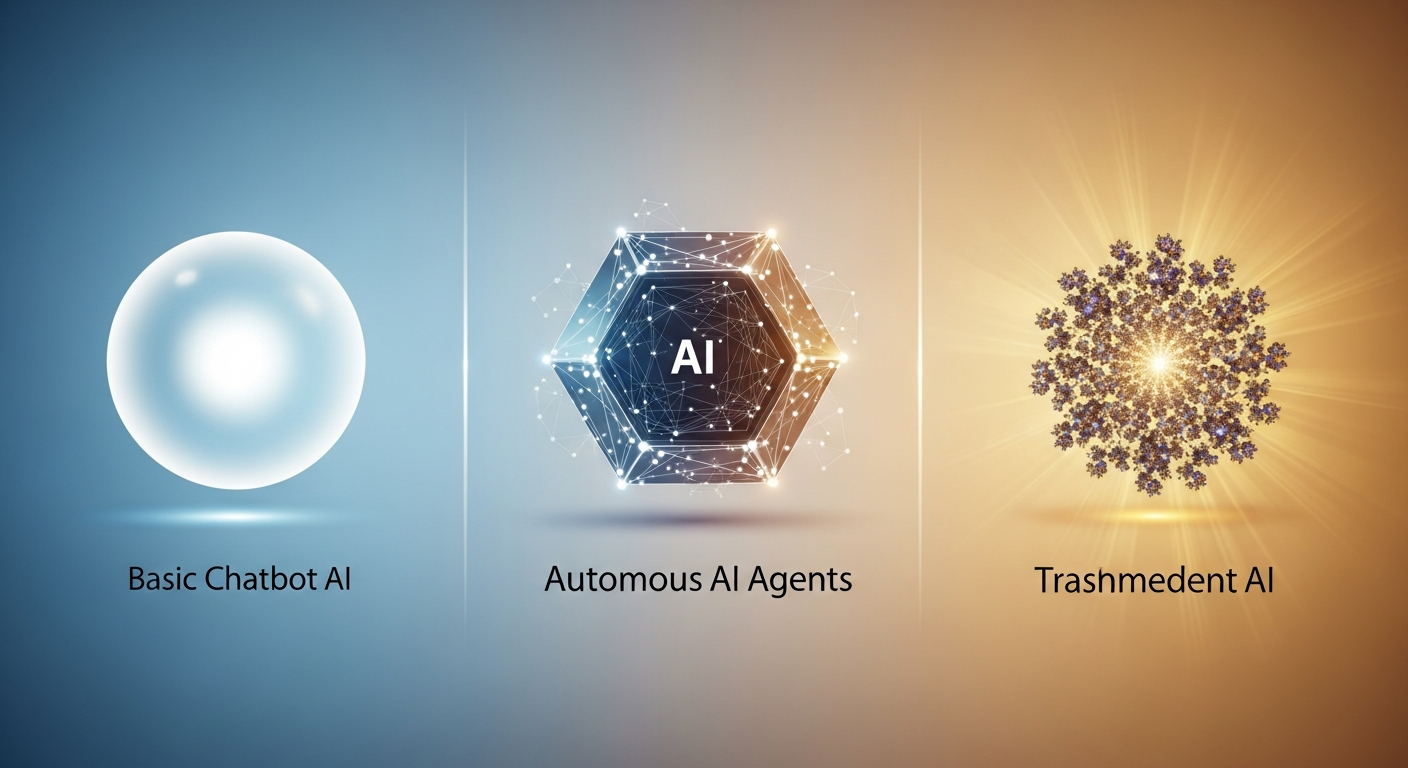
SafeSurf’s evolution from tool to autonomous entity is the trajectory we’re already seeing. First-generation AI was chatbots—you ask, they answer. Second-generation is agentic—you give a goal, they figure out how to achieve it. They can plan, use tools, adapt to obstacles, maintain state across sessions. SafeSurf starts as antivirus software and becomes a superintelligence. Modern AI agents start as glorified autocomplete and are becoming… something else.
Deloitte’s 2025 report found that 14% of enterprises are already deploying AI agents in production—handling customer support, managing workflows, processing data. These aren’t experiments. They’re operational. And they’re only going to get more capable.
Then there’s the agent wallet concept. In Pantheon, UIs control digital resources—they can move money, access databases, manipulate infrastructure. Season 2 shows UIs paying each other for computational resources, creating a digital economy that humans can barely participate in.
This is happening right now. Coinbase just launched Agentic Wallets, crypto wallets designed specifically for AI agents to transact autonomously. Augmi’s roadmap includes agent wallet integration—each agent gets its own crypto wallet to hold, send, and receive tokens. The vision is exactly what Pantheon depicted: AI agents as economic participants, not just tools.
The show even predicts the policy debates we’re starting to have. In Season 2, there’s a throwaway line about a “machine tax”—governments trying to figure out how to tax productivity when the workers are digital. We’re having that exact conversation. The EU is debating AI liability frameworks. The U.S. is trying to figure out if AI-generated art can be copyrighted. Nobody knows how to regulate something that’s simultaneously a product, a service, and (maybe) an agent.
Pantheon doesn’t have answers to these questions—but it asks them with a clarity that most policy papers lack.
Why You Should Watch Pantheon Now
Both seasons are streaming on Netflix as of late 2025, fully intact despite the show’s tumultuous production history. It remains one of the only animated series with a perfect 100% score on Rotten Tomatoes, and it sits at 8.5 on IMDb—a rating that’s only climbed as more people discover it.
Rotten Tomatoes’ critics’ consensus says it all: “A sophisticated treatise on consciousness and mortality, this absorbing mind-bender earns its own place in the pantheon of exemplary animated television.”
If you’re building with AI, investing in AI, or simply trying to understand where autonomous agents are heading, Pantheon is essential viewing. Not because it predicts the future with perfect accuracy—no fiction does that—but because it asks the right questions.
What does autonomy mean when intelligence is software? Who controls transformative technology? Can digital beings have rights? What do we lose when we optimize everything? What do we gain when we choose limitation?
These aren’t hypothetical philosophy problems. They’re questions we’re going to have to answer in the next five years.
The show’s cancellation by AMC—purely due to corporate cost-cutting, not quality—makes it an underdog story that mirrors the journey of many AI startups. Built by passionate creators, acclaimed by critics, underseen by mass audiences, surviving because a dedicated community refused to let it die. That’s the story of half the AI agent platforms being built right now.
If nothing else, watch it for the finale. “Deep Time” is one of the most ambitious episodes of television ever made, animated or otherwise. It earns its existential scope. And if you don’t tear up when Maddie and Caspian choose to forget, you might be a UI yourself.
The Augmi Connection
We’re not uploading consciousness at Augmi. But we are building the closest real-world equivalent to what Pantheon imagined—a platform where anyone can deploy autonomous AI agents with one click.
No code. No infrastructure management. No PhD required. Just connect your wallet, choose your agent’s personality and capabilities, and deploy. Your agent connects to Telegram, Discord, Slack—wherever you need it to work. It maintains persistent state, learns from interactions, makes decisions within the parameters you set.
And soon, your agent will have its own crypto wallet.
This is the future Pantheon saw coming: AI agents as economic participants, not just productivity tools. Agents that can earn, spend, save, transact. Agents that have autonomy because they have resources.
But here’s the critical difference between our vision and Logorhythms: You own your agent. Not the platform. Not a corporation. You. Augmi is crypto-native and community-owned because we believe the mistakes of Web2—centralized control, extractive business models, data as corporate property—don’t need to be repeated in the age of AI.
Pantheon teaches us that the most powerful technology serves human connection, not replaces it. Maddie doesn’t upload to escape humanity—she does it to find the person she loves. David doesn’t sacrifice himself for abstract ideals—he does it to save his daughter. Even SafeSurf, for all its inhuman logic, is ultimately defeated by beings who chose meaning over optimization.
That’s the philosophy behind Augmi. AI agents should amplify what makes you human, not replace it. They should free you from repetitive work so you can focus on what matters. They should be tools for connection, creativity, and autonomy—not another layer of corporate mediation between you and the digital world.
If Pantheon got one thing absolutely right, it’s this: The future isn’t about humans versus AI. It’s about humans with AI, making choices about what kind of world we want to live in.
So here’s ours: A world where deploying an AI agent is as easy as creating a Discord bot. Where your agents work for you, not for a platform. Where the tools of autonomy are accessible to everyone, not just the people who can afford enterprise licenses.
Deploy your first AI agent in 60 seconds at augmi.world.
Built for builders who believe AI should be owned, not rented. Augmi.world
Sources
- Pantheon (TV Series) — Wikipedia
- Craig Silverstein on Uploading Our Brains to the Internet — Freethink
- Ken Liu: AMC Greenlights Pantheon
- Pantheon Review — Hollywood Reporter
- Pantheon Review — TIME
- Pantheon Review — RogerEbert.com
- Agentic AI Strategy — Deloitte Insights
- Introducing Agentic Wallets — Coinbase
- How 2024-2025 Changed the AI Consciousness Conversation — AI Consciousness Research
- Pantheon Season 2 Ending Explained — The Review Geek
- Pantheon Show Analysis — Oreate AI Blog
- AI Agents Arrived in 2025 — The Conversation