
The Software Development Renaissance Is Here—And Most People Are Missing It
February 2026
Greg Brockman, co-founder of OpenAI, just said the quiet part loud:
“Software development is undergoing a renaissance in front of our eyes. If you haven’t used the tools recently, you likely are underestimating what you’re missing.”
He’s not being hyperbolic. And the people who dismiss this as “AI hype” are about to have a very uncomfortable 2026.
I’ve spent the last three months embedded in this shift—building with AI agents daily, watching the tooling evolve, and talking to developers who’ve completely transformed how they work. Here’s what’s actually happening and why it matters.

The Step Function That Changed Everything
Brockman specifically calls out December 2025 as an inflection point. He’s right. Something fundamentally shifted.
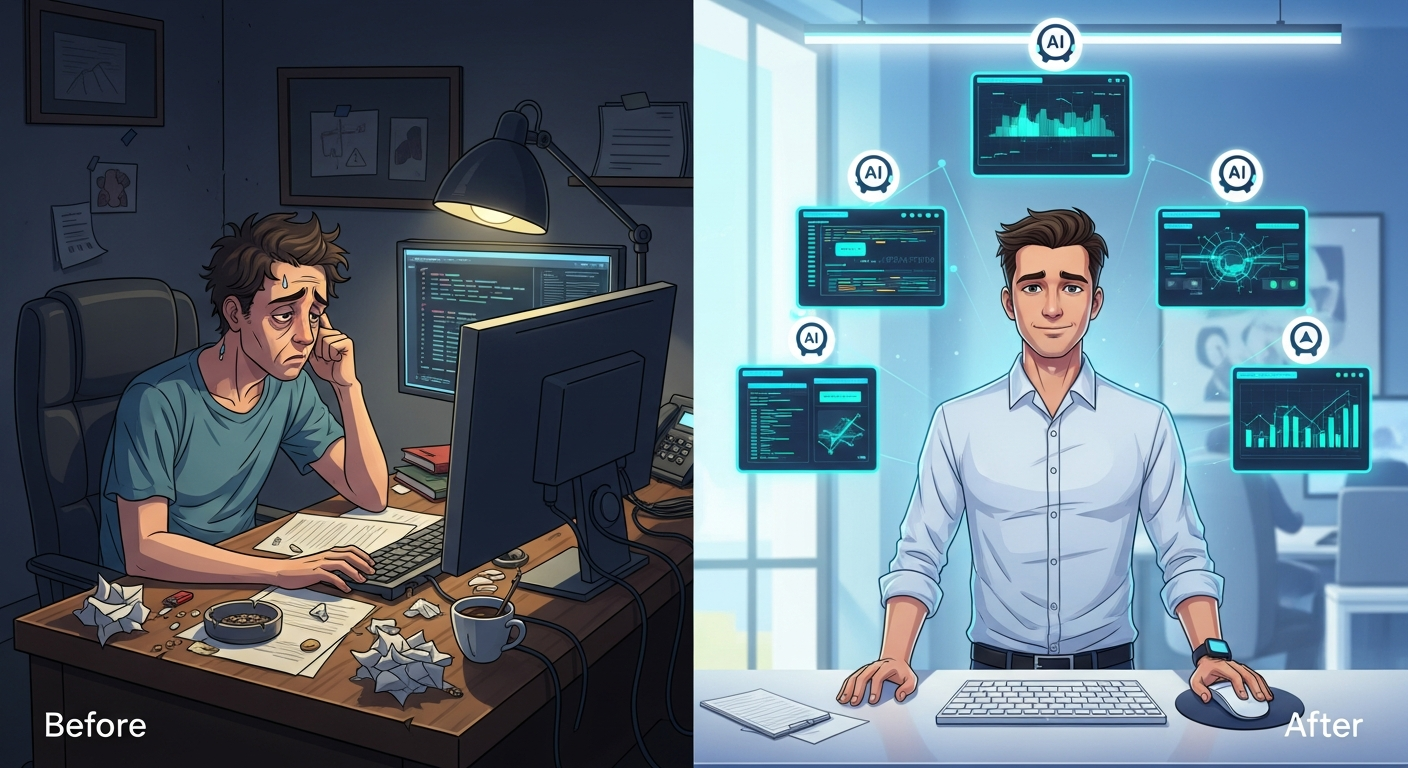
Before December:
- AI coding assistants were useful for autocomplete
- You could ask questions and get decent boilerplate
- Complex tasks still required heavy human intervention
- Context windows were a constant limitation
After December:
- AI agents can hold entire codebases in context
- Multi-file refactors happen in minutes, not hours
- Agents verify their own work through testing loops
- Human role shifts from “writer” to “director”
The productivity gains aren’t incremental. They’re multiplicative.
One developer tracked his git commits for two years before and after adopting agent-first workflows. The result? 30-40% more output with less cognitive load. Another team measured a 67% increase in pull request throughput.
These aren’t cherry-picked anecdotes. They’re becoming the baseline for developers who’ve made the switch.
Why “Great Engineers” Are Switching First
Brockman mentions that “great engineers” at OpenAI have embraced these tools. That’s the pattern worth noting.
The best engineers aren’t threatened by AI assistance—they’re the fastest adopters. Why?
-
They recognize leverage when they see it. Great engineers have always been force multipliers. AI agents are the biggest force multiplier since version control.
-
They’re comfortable with abstraction. Moving from “writing code” to “directing agents that write code” is just another layer of abstraction. Great engineers have been doing this their whole careers.
-
They value outcomes over identity. Lesser engineers tie their identity to “being the one who writes the code.” Great engineers care about shipping quality software—however it gets done.
The irony? The developers most resistant to AI tools are often the ones who would benefit most. They’re spending hours on tasks that could take minutes.
The Three Workflows That Define the Renaissance
After analyzing how top performers work, three patterns emerge:
1. Parallel Agent Orchestration
The old way: One developer, one task, sequential execution.
The new way: One developer directing 5-15 AI agents simultaneously. While Agent A implements Feature 1, Agent B writes tests for Feature 2, and Agent C documents the API.
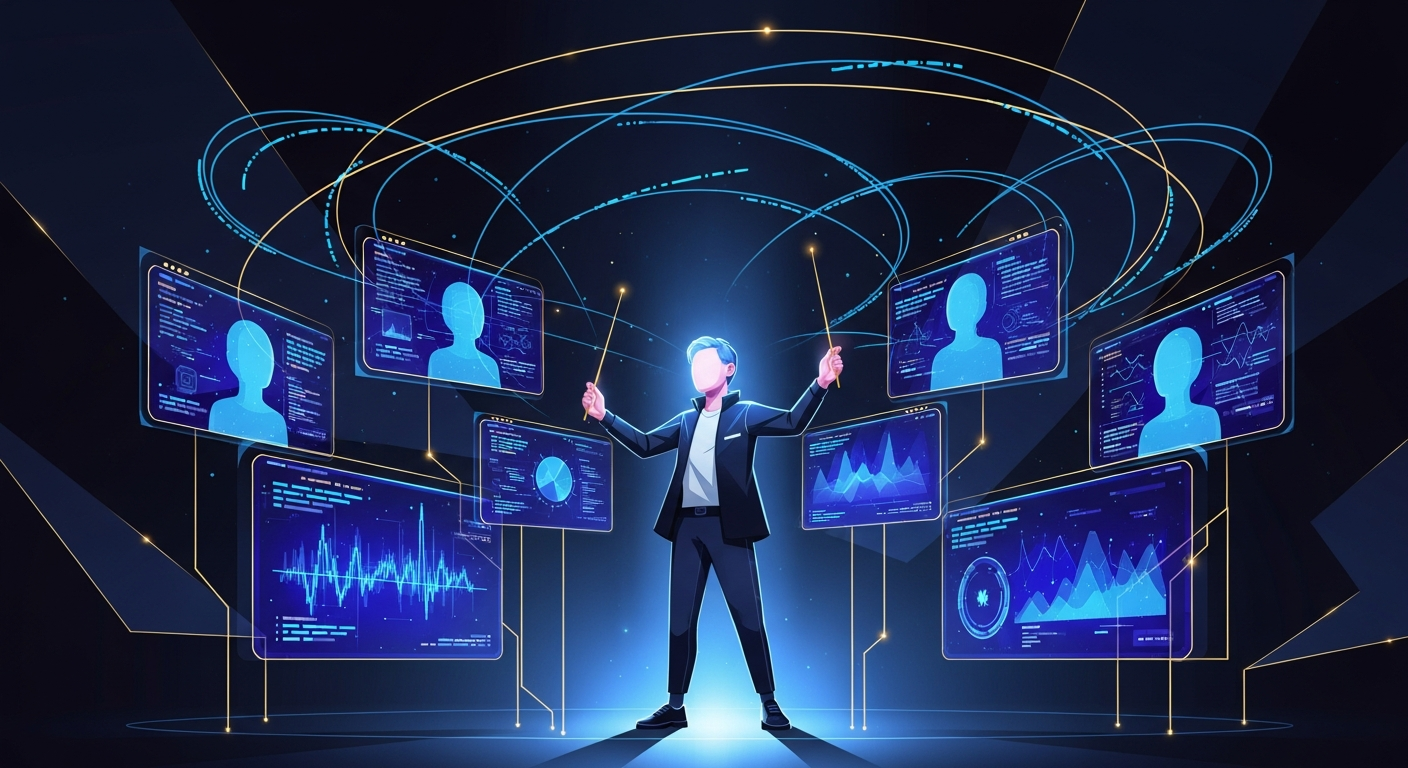
This isn’t theoretical. Developers are running multiple Claude instances in numbered terminal tabs, handing off context between them, and managing AI workstreams like a technical lead manages a team.
The bottleneck has shifted from “how fast can I type” to “how well can I coordinate.”
2. Institutional Memory
Every session with an AI agent used to start from zero. You’d re-explain your codebase, your preferences, your patterns.
Now, developers maintain CLAUDE.md or similar files—living documents that capture:
- Mistakes the agent has made (so it doesn’t repeat them)
- Project conventions and anti-patterns
- Testing requirements
- Domain-specific knowledge
The agent reads this at the start of every session. Today’s debugging session improves tomorrow’s code generation. Compound learning, automatically.
3. Self-Verification Loops
The breakthrough insight: AI agents that can verify their own work produce dramatically better output.
Top developers set up feedback loops where agents:
- Write code, then write tests for that code
- Implement features, then test them in a real browser
- Generate solutions, then have separate agents review them
The result? Quality that approaches (and sometimes exceeds) human-written code, at 10x the speed.
The Renaissance Isn’t Just for Developers
Here’s what most people miss: this renaissance extends far beyond traditional software development.
Entrepreneurs are building MVPs in days instead of months. Vulcan Technologies—a YC startup founded by people with no formal engineering background—won government contracts and raised $11M within four months. Their secret? They directed AI agents to build what they couldn’t code themselves.
Creators are automating their workflows. Content calendars, research pipelines, audience engagement—all orchestrated by AI agents that run 24/7.
Professionals in every field are augmenting their capabilities. Lawyers summarizing case law. Analysts processing market data. Marketers personalizing at scale.
The common thread? They’re not using AI as a tool. They’re using it as infrastructure.
Why Now? Why This Moment?
Several factors converged to create this inflection:
Context windows expanded. Models can now hold 100K+ tokens—enough to understand an entire codebase, not just a single file.
Agent architectures matured. It’s not just about better models. It’s about better scaffolding—memory systems, tool use, verification loops.
Cost collapsed. What cost $100/hour in API calls a year ago costs $5 today. AI assistance went from luxury to utility.
Cultural acceptance shifted. Using AI to code went from “cheating” to “standard practice” in elite engineering circles.
The tools existed before December. But the combination of capability, cost, and culture reached a tipping point.
The Uncomfortable Truth About Falling Behind
Here’s what Brockman is really saying: if you haven’t engaged with these tools recently, you’re operating with an outdated mental model.
The gap between developers using modern AI workflows and those who aren’t is already significant. Within 12 months, it will be enormous.
This isn’t about replacement. It’s about augmentation. The developers who thrive will be those who learn to:
- Specify problems clearly
- Orchestrate multiple agents effectively
- Build verification systems
- Capture institutional knowledge
The skills are shifting from “writing syntax” to “directing intelligence.”
How to Join the Renaissance (Starting Today)
If you’re convinced but unsure where to start, here’s a practical path:
Week 1: Experience the delta
- Use Claude Code, Cursor, or GitHub Copilot for a real project
- Notice where it saves time and where it falls short
- Pay attention to how your role changes
Week 2: Build memory systems
- Create a CLAUDE.md for your main project
- Document your patterns, preferences, and past mistakes
- Iterate based on what works
Week 3: Try parallel workflows
- Run two agent instances on different features simultaneously
- Practice context-switching between them
- Notice where the bottleneck moves
Week 4: Add verification
- Implement test-driven development with agents
- Have one agent write code, another review it
- Measure quality improvements
The Augmi Approach: Always-On Agents for Everyone
At Augmi, we’ve built our platform around one insight: the renaissance shouldn’t require DevOps expertise.
Most people hear “run your own AI agent” and think: Docker configurations, server management, uptime monitoring, security hardening. Hours of setup before you can even start.
We’ve eliminated that friction entirely.
60 seconds to deploy. Pick a template, add your API key, and your agent is live.
Always-on infrastructure. Your agent runs 24/7 on dedicated cloud compute. No laptop required.
Multi-channel presence. Connect to Telegram, Discord, Slack, WhatsApp—one agent, everywhere you work.
Your keys, your control. Bring your own Anthropic API key. We never see it. You control costs directly.
The renaissance isn’t about having access to AI. Everyone has that. It’s about having AI that works for you continuously—even while you sleep.
The Choice in Front of You
Greg Brockman isn’t trying to sell you anything. He’s making an observation about reality: software development has fundamentally changed, and most people haven’t updated their understanding.
The developers, entrepreneurs, and creators who recognize this are pulling ahead. The ones who dismiss it as hype will spend the next few years wondering why their peers seem so much more productive.
The renaissance is here. The tools are accessible. The only question is whether you’ll participate in it—or watch from the sidelines.
Ready to join the renaissance? Deploy your first AI agent in 60 seconds at augmi.world.